One doable next step
Parallel Play Narration
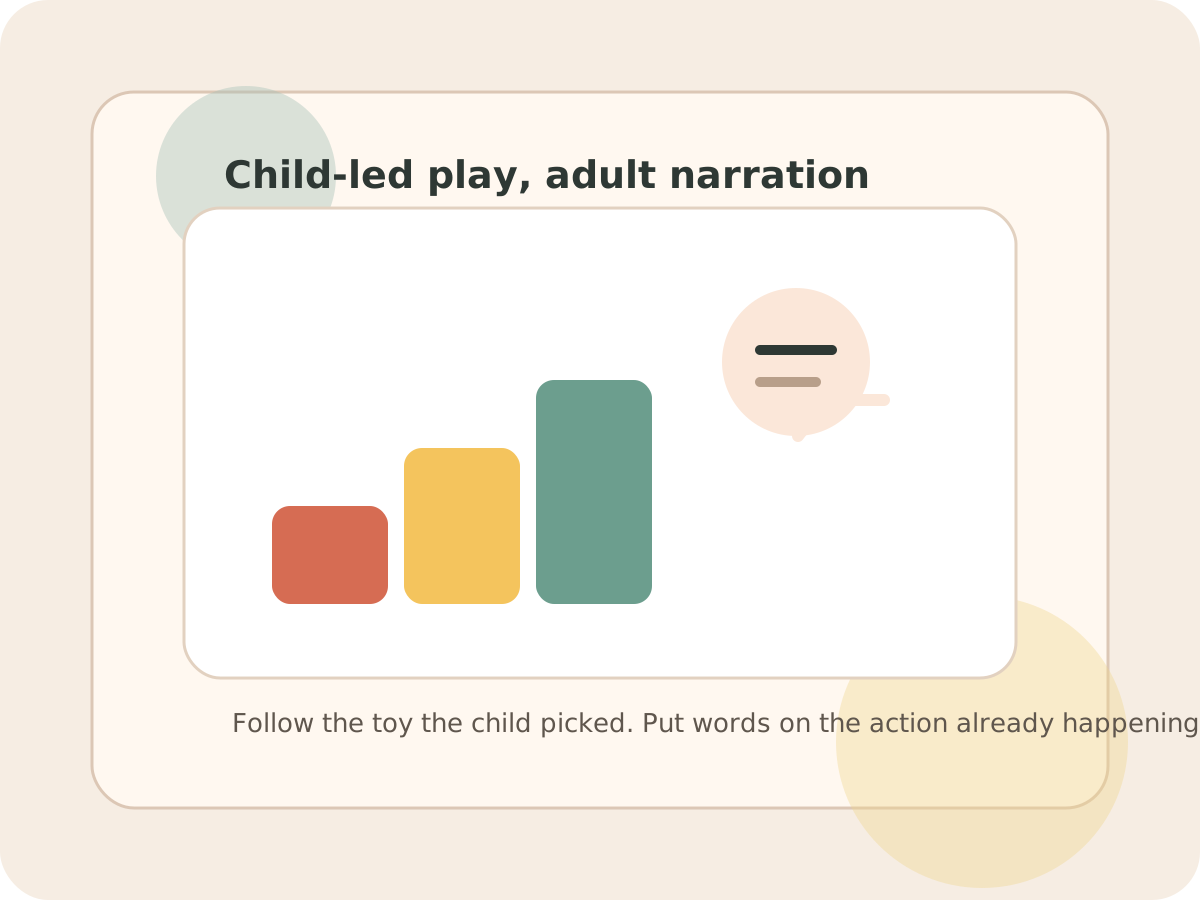
Sit next to your child and narrate what THEY are doing, not what you want them to do. This technique is called 'sportscasting' and builds vocabulary without pressure.
Set the age, pick the focus, and jump straight to the tool that fits today instead of digging through the app.
Child age right now
First words, routines, and fast-moving developmental shifts.
What feels most urgent right now?
What kind of help do you want first?
Today's snapshot
A quick read on the milestone anchor, one idea, and the next best click.
19-24 months
Your toddler can handle instructions with two parts: "Get your shoes and bring them to Daddy."
Parent note
If your gut tells you something is off, request a speech-language evaluation. You do NOT need a doctor's referral in most states -- you can self-refer to your local Early Intervention program (before age 3) or contact an SLP directly. Trust your instincts.
One doable next step
Sit next to your child and narrate what THEY are doing, not what you want them to do. This technique is called 'sportscasting' and builds vocabulary without pressure.
Worth watching
Fewer than 50 words by 24 months
Today's tip
Sit next to your child and narrate what THEY are doing, not what you want them to do. This technique is called 'sportscasting' and builds vocabulary without pressure.
Listen to this tip
39 sec
Try this line
As your child stacks blocks: 'You're putting the red block on top. Up, up, up! Oh it's so tall!' Don't ask questions -- just describe.
Why this works
Play + joint attention: Following a child’s lead in play supports imitation, shared attention, and language growth at the same time.
Guided next step
Open a full weekly plan when you want more structure than today's quick tip.
Jump to the area that matches today's concern, or use these as a quick daily scan when you want to feel more organized.
See what clearer sounds and easier-to-understand talking can look like now.
Check vocabulary, listening, and how language is building in daily routines.
Use play to build attention, imitation, flexibility, and shared engagement.
Review mealtime watch-fors and how feeding connects with development.
Support transitions and calmer routines with predictable communication.
Go deeper with clinician-reviewed creators and communities.
A calm reminder
You do not need to “prove” a problem before you ask for help. If a skill feels off, a routine is stressful, or your child has lost words or abilities they used before, that is enough to start the conversation.
Quick weekly check-ins help you notice your child's progress, build confidence, and earn badges along the way.
Take your first check-in